Separation and Longing: Hijr in Persian Mystical Poetry
The Wound at the Heart of the Path
In the vast library of Persian mystical poetry, stretching from the early Khorasani masters through the golden age of Rumi and Hafez and beyond, one concept returns again and again with the persistence of a recurring dream. That concept is hijr, the Arabic-Persian word for separation, absence, and exile. Hijr is not simply a theme in this poetry. It is the existential condition from which all mystical longing springs.
To understand why Persian Sufi poets were so deeply preoccupied with separation, one must first understand their cosmological starting point. In the tradition drawn from Neoplatonic sources, filtered through Islamic thought and recast in Persian verse, the human soul is understood as a divine spark that has descended into the world of matter and form. This descent is necessary for the soul’s eventual return to its origin, but it is also an exile. The soul is here, but it belongs elsewhere. It is alive in the world, but it remembers, in some register deeper than ordinary consciousness, the place from which it came.
Hijr is the name for that memory’s ache.
Rumi and the Reed’s Complaint
No poet in the Persian tradition has articulated the experience of hijr with greater power or precision than Jalal al-Din Rumi (1207 to 1273 CE). The very first verses of his monumental Masnavi declare separation to be the fundamental human condition:
بشنو این نی چون شکایت میکند از جداییها حکایت میکند
Listen to this reed, how it tells of separations, how it narrates the stories of all partings.
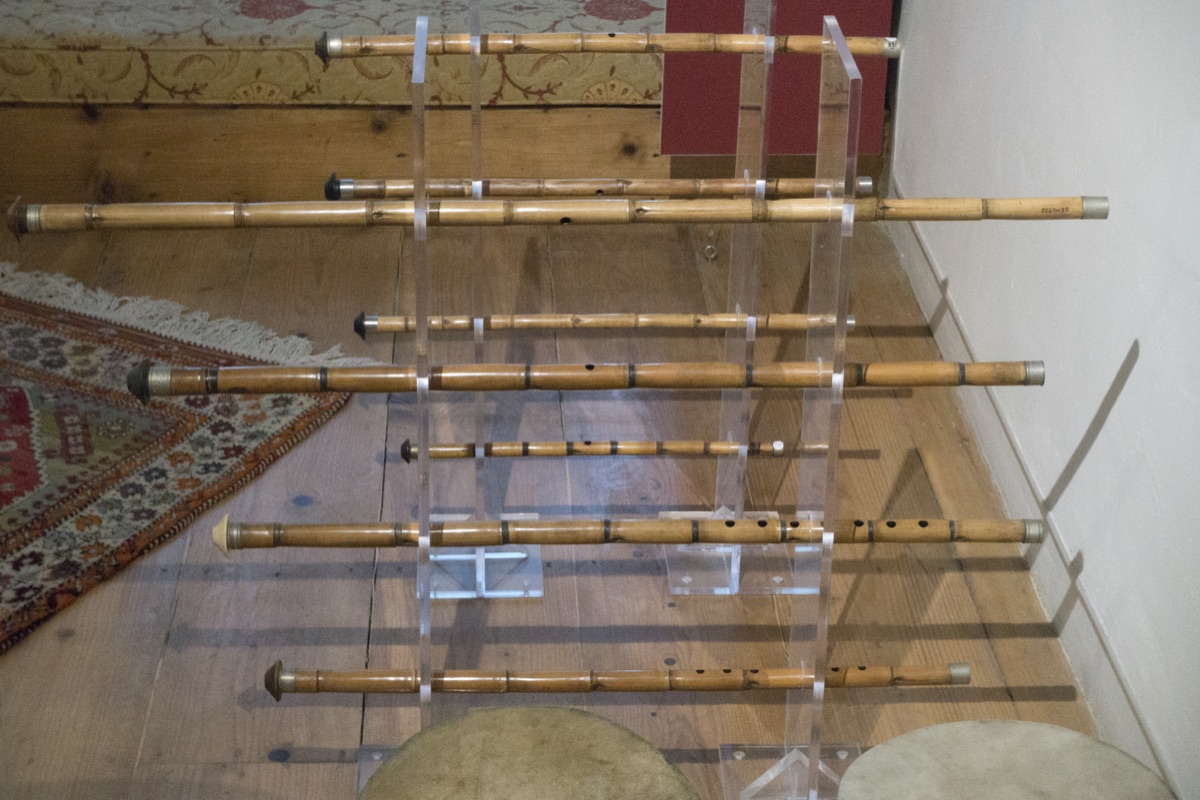
The reed (nay) has been cut from its reed bed (neystan) and now produces its haunting music precisely because of that wound. This is Rumi’s central paradox: the voice of longing exists only because of separation. If the reed had never been cut, it would have no music to give. Its cry is the cry of hijr, and that cry, as Rumi insists, is recognized by all human beings because all human beings share in the same condition.
Rumi goes further, asking for the full experience of this anguish rather than a mitigation of it:
سینه خواهم شرحه شرحه از فراق تا بگویم شرح درد اشتیاق
I want a chest torn to shreds by separation, so that I may fully speak the pain of yearning.
Here Rumi names both the wound (firaq, a near synonym of hijr that emphasizes the tearing quality of separation) and the longing that arises from it (eshtiyaq, intense yearning or ardent desire). The relationship between these two is not accidental. The deeper the separation, the more intense the longing, and the more authentic the speech that emerges from it. Rumi does not pray to be spared the experience of firaq. He prays to enter it fully enough to speak from its very center.
Eraghi and the Vigil of Separation
Fakhr al-Din Eraghi (approximately 1213 to 1289 CE) was a poet and mystic who spent much of his life as a wandering dervish, studying under the great Sufi masters of his age including Baha al-Din Zakariyya of Multan and the school of Ibn Arabi in Anatolia. His poetry is saturated with hijr in its most personal and immediate register:
هر سحر صد ناله و زاری کنم پیش صبا تا ز من پیغامی آرد بر سر کوی شما
Every dawn I send a hundred laments and cries to the morning breeze, hoping it will carry a message from me to your quarter.
The morning breeze (saba) in Persian poetry is the traditional messenger between the separated lover and the absent beloved. Eraghi’s image is vivid and specific: every morning, before the world awakens, the lover rises to perform this ritual of lamentation. The repetition (every dawn, a hundred laments) suggests not melodrama but a sustained spiritual practice. Hijr has become a discipline, a daily liturgy of longing conducted before sunrise while the rest of the world sleeps.
Eraghi is also capable of expressing the paradox of separation with stark, almost brutal honesty:
مردن و خاکی شدن بهتر که بی تو زیستن سوختن خوشتر بسی کز روی تو گردم جدا
Dying and turning to dust is better than living without you, burning is far sweeter than being separated from your face.
This apparently hyperbolic statement, common to the ghazal tradition, is not simply rhetorical excess. It encodes a genuine theological proposition: the pain of separation from the divine beloved is worse than physical death. Burning in love’s fire (a frequent image across Persian poetry, from Rumi’s atash-e eshq to Hafez’s imagery of flame) is preferable to the living death of spiritual alienation. Eraghi here articulates what Rumi implies: hijr is not merely unpleasant. It is the deepest possible human suffering, because it is the suffering of the soul cut off from its source.
The poet even turns the pain back on the beloved with a kind of tender accusation:
دل ز غم رنجور و تو فارغ ازو وز حال ما بازپرس آخر که: چون شد حال آن بیمار ما؟
The heart is sick with grief and you are indifferent to it, indifferent to our state, ask at last: what became of that patient of ours?
The heart as patient (bimar) and the beloved as physician who will not inquire after the sick one is a rich conceit in Persian poetry. Its gentle accusation does not express resentment. It expresses the intimacy of a relationship in which the beloved’s apparent indifference is itself part of the mystery of divine love. The lover who dares to ask the beloved “why have you not inquired?” is already in a relationship of extraordinary closeness.
Baba Taher and the Humble Heart
Baba Taher Oryan (approximately 10th to 11th century CE) wrote in the dialect form known as do-beyti (quatrain), and his language has a directness and simplicity that cuts through ornament to the emotional core. In his poetry, hijr is expressed not through grand philosophical claims but through the felt texture of daily existence:
تن محنت کشی دیرم خدایا دل با غم خوشی دیرم خدایا
I have a body weighed down by suffering, O God, I have a heart that finds comfort in grief, O God.
What is striking here is the phrase “del ba gham khoshi diram,” meaning a heart that takes pleasure in its own grief. This apparent paradox points to a crucial feature of the Sufi understanding of hijr: the pain of separation, when properly understood and oriented toward the divine, becomes a form of sweetness. Grief is not the opposite of joy in this framework. It is one of the paths to it. Baba Taher does not ask to be relieved of his suffering. He simply names it, holding it up to God with the transparency of a child showing a wound to a parent.
Baba Taher continues with an image of remarkable delicacy:
لباسی دوختم بر قامت دل زپود محنت و تار محبت
I have sewn a garment for the stature of my heart, woven of the weft of suffering and the warp of love.
The metaphor of weaving (combining pud and tar, weft and warp, to produce cloth) captures the inseparability of suffering and love in the mystical life. Hijr (suffering, mihnat) and love (mahabbat) are not opposed forces. They are the two threads from which the fabric of the spiritual life is made. Take away one and the cloth falls apart. The garment Baba Taher has sewn for his heart has been constructed from both, because there is no other way to dress a heart that has truly loved.
Abu Saeed and the Invitation to Return
Abu Saeed Abolkheyr (967 to 1049 CE) is one of the earliest and most radical of the Persian Sufi masters, known for his passionate embrace of divine love and his contempt for religious formalism. His famous quatrain on the return of the seeker has become one of the most celebrated expressions of divine mercy in the entire tradition:
باز آ باز آ هر آنچه هستی باز آ گر کافر و گبر و بتپرستی باز آ این درگه ما درگه نومیدی نیست صد بار اگر توبه شکستی باز آ
Come back, come back, whatever you are, come back, whether you are an unbeliever, a fire-worshipper, an idol-worshipper, come back. This threshold of ours is not a threshold of despair. If you have broken your repentance a hundred times, come back.
This poem reframes hijr entirely. Where Rumi, Eraghi, and Baba Taher dwell in the experience of separation from the side of the seeker, Abu Saeed gives voice to the divine beloved addressing the separated soul. The message is startling in its unconditional generosity: no matter what you are, no matter how many times you have failed or strayed or broken your promises, the door is open. This threshold (dargah) is not a place of despair.
What Abu Saeed’s poem reveals is the other face of the paradox of hijr. The soul experiences separation as distance, as exile, as the absence of the beloved. But from the beloved’s side, as Abu Saeed imagines it, there is no abandonment. The door has always been open. The separation has always been, at least in part, the seeker’s own misperception of a distance that, at the deepest level, does not exist.
This does not trivialize hijr. Rather, it recontextualizes it. The pain is real. But the abandonment is not. The beloved has been present throughout every moment of the seeker’s sense of absence. The work of the spiritual path, in this reading, is not to travel from here to there, from separation to union, but to recognize a nearness that was always already the case.
The Paradox of Separation as Gift
This brings us to the central paradox of hijr in Persian mystical poetry: the pain of separation is itself a form of grace. The beloved who withholds immediate presence is not being cruel. The beloved is creating the very longing that will eventually draw the seeker home. To be loved is to be made to ache. To ache is to be set in motion toward the source of all love.
This is why Sufi poets do not simply complain about separation. They celebrate it, study it, and cultivate it as a spiritual practice. The poet who can write truthfully about hijr is already more awake than the person who has never felt it. The ache of absence is the beginning of wisdom.
Hafez, writing in the 14th century CE, captured this double quality of the mystical path with characteristic elegance:
مرا در منزل جانان چه امن عیش چون هر دم جرس فریاد میدارد که بربندید محملها
What comfort can I find at the beloved’s station, when every moment the caravan bell cries out: fasten the litters, prepare to move.
The image is of a traveler who has arrived, momentarily, at a station of rest, but the caravan bell immediately announces departure. There is no permanent settling in the world of forms. The journey continues. And the movement is always, in its deepest structure, a movement from hijr toward wisal, from separation toward union.
Wisal: The Destination Toward Which All Longing Moves
All discussion of hijr in Persian mystical poetry is oriented, even when not explicitly stated, toward its complement: wisal (وصال), union or reunion with the beloved. Hijr and wisal are not merely opposites. They are co-constitutive. The depth of the union one can experience is proportional to the depth of the separation that preceded it. This is why the great masters of the tradition do not counsel their students to move quickly past the pain of hijr. They counsel them to remain in it, to know it fully, to let it do its purifying work before the door of wisal opens.
In this sense, Persian mystical poetry is not a literature of escape from suffering. It is a literature that teaches its readers how to suffer well, how to let the wound of separation open rather than close, and how to allow that opening to become, in time, the door through which the divine enters.
From Rumi’s lacerated chest to Eraghi’s dawn vigil before the morning breeze, from Baba Taher’s garment woven of love and grief to Abu Saeed’s open threshold that never closes, the tradition speaks with one voice on this matter: separation is real, and it hurts. But it hurts because it is already love. The pain of hijr and the joy of wisal are not opposites standing at either end of a long road. They are two faces of the same overwhelming reality, and the poetry that holds them together is among the greatest spiritual literature that human beings have produced.