How to Read a Persian Ghazal: A Beginner's Guide
Why the Ghazal Rewards a Different Kind of Attention
When Western readers first encounter a Persian ghazal, they often search for the thing that feels most familiar: a story, an argument that builds, a narrative arc. The ghazal offers none of these. Instead, it offers something rarer and, once understood, more intoxicating: a series of radiant moments, each complete in itself, all orbiting the same emotional sun.
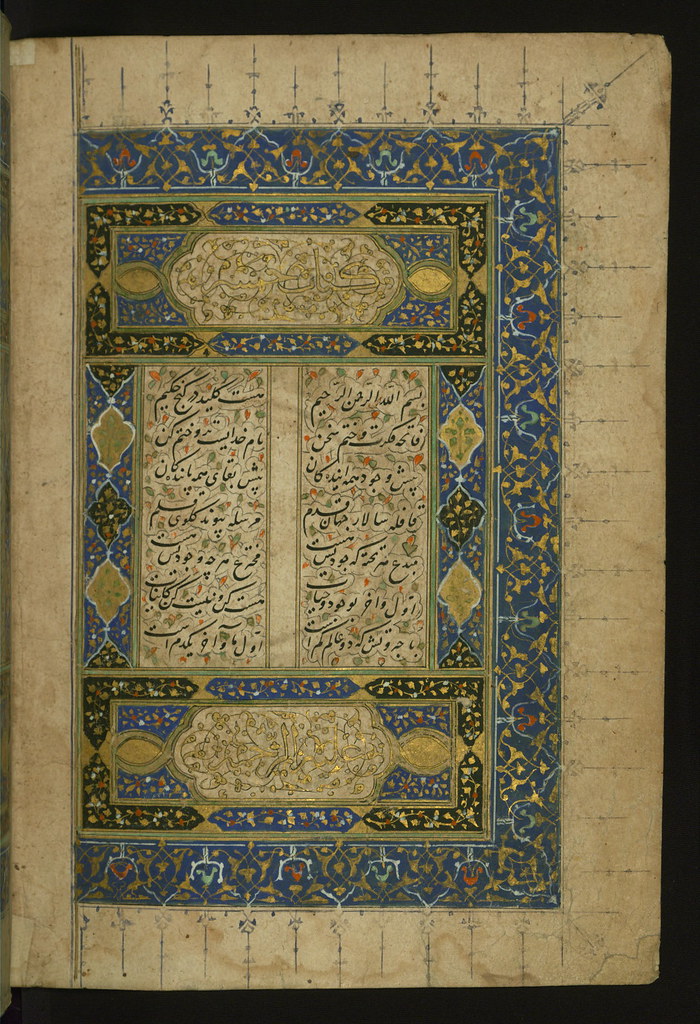
The ghazal (غزل) is the central lyric form of classical Persian poetry. It was refined to its highest expression by Hafez of Shiraz (حافظ شیرازی, circa 1315 to 1390 CE), whose Divan remains one of the most read books in the Persian-speaking world, consulted for spiritual insight as often as for literary pleasure. Learning to read a ghazal is not difficult, but it requires setting aside some assumptions and picking up a small set of new tools.
This guide walks you through those tools, one at a time, and then applies them to one of the most famous opening verses in all of Persian poetry.
Step 1: Learn the Architecture (Radif, Qafia, Matla, Maqta)
A classical ghazal has between five and twelve couplets, each called a bayt (بیت). Every bayt consists of two half-lines (misra). The formal conventions are as follows:
The qafia (قافیه) is the rhyme. In a ghazal, both lines of the opening couplet rhyme, and thereafter only the second line of each couplet carries the rhyme.
The radif (ردیف) is the refrain: a word or phrase that repeats after the qafia at the end of each couplet’s second line (and both lines of the opening couplet). The radif is not merely decorative. As it recurs through the poem, it accumulates meaning and emotional weight, arriving each time in a slightly new light.
The matla (مطلع) is the opening couplet, the one in which both lines share the rhyme and refrain. It establishes the poem’s tonal key and introduces the radif.
The maqta (مقطع) is the final couplet, where the poet traditionally inserts their pen name (takhallus), often in a moment of self-address that gives the poem a final pivot or turn.
Step 2: Accept That Each Couplet Is Self-Contained
This is the most important shift for a reader trained on Western lyric poetry. In a ghazal, you do not need the third couplet to understand the second. Each bayt is a world unto itself. Poets and scholars of the classical tradition speak of this quality as tazmin (the “self-sufficiency” of the bayt). A skilled reader savors each couplet fully before moving to the next, the way you might linger over each dish in a feast rather than rushing toward dessert.
This does not mean the couplets are random. A master like Hafez arranges them with a deep coherence, but that coherence is atmospheric and associative rather than argumentative. Think of it as the logic of music rather than the logic of prose.
Step 3: Follow the Radif as It Shifts Meaning
The radif is the heartbeat of the ghazal. As it reappears at the end of each couplet, notice how its meaning changes depending on what precedes it. A radif that means “problems” or “difficulties” at first (مشکلها, “mushkilha”) will be transformed by each new context: romantic difficulty, spiritual difficulty, metaphysical difficulty. The poet is essentially playing a single note in changing harmonic contexts, and the beauty lies in how the same word can mean something different each time while remaining formally identical.
Step 4: Spot the Self-Naming in the Final Couplet
When you reach the maqta and encounter the poet’s name, do not treat it as a simple signature. Hafez uses his name with rich irony, tenderness, and sometimes mild self-rebuke. The appearance of “Hafez” in the final couplet is a literary gesture: the poem folds back on its maker, and the “I” of the poem becomes simultaneously a persona and a real individual. This doubling is part of the ghazal’s distinctive intimacy.
Step 5: Hold Multiple Meanings Simultaneously
Persian classical poetry operates on at least two levels at once. The literal or worldly level (zahir, ظاهر) presents images of wine, the beloved, the tavern, the rose, and the nightingale. The mystical or inner level (batin, باطن) understands these same images as metaphors for divine love, spiritual longing, the soul’s intoxication in the presence of God, and the pain of separation from the divine source.
This layering is not accidental. It is the entire architecture of the ghazal’s meaning. The wine (may, می) is simultaneously fermented grape and the ecstasy of union with God. The beloved (yar, یار) is simultaneously an earthly person and the divine. The reader is not meant to choose one reading over the other; both are true, and the tension between them is where the poem lives.
Step 6: Do Not Look for a Linear Narrative
If you finish reading a ghazal and feel you cannot summarize “what happened,” you have probably understood it correctly. The ghazal does not tell a story. It creates a mood, a field of resonance. The question to ask is not “what does this poem say?” but “what does this poem feel like?” and “what associations does each image awaken?”
A Verse-by-Verse Walkthrough: Hafez’s “Ala ya ayuha al-saqi”
This ghazal is one of the most celebrated in the entire Divan. Its opening line is in Arabic, a formal flourish that announces the poem’s scope and learning. Let us work through it couplet by couplet.
Matla (Opening Couplet):
الا یا ایها الساقی ادر کأسا و ناولها که عشق آسان نمود اول ولی افتاد مشکلها
Ala ya ayyuha al-saqi, adir ka’san wa navilha / ke eshq asan nemud avval vali oftad mushkilha
“O saqi, come, pass the cup and offer it around / for love seemed easy at first, but then the difficulties fell.”
The opening line quotes or echoes classical Arabic verse, instantly signaling the poem’s cosmopolitan ambition. The saqi (ساقی, the cupbearer) is both a literal wine-server and a figure of the divine. The second line establishes the radif: “mushkilha” (مشکلها, difficulties/problems). Love began with lightness and ease; only afterward came the weight. This is the poem’s emotional key: a rueful wisdom, not bitterness.
Second Couplet:
به بوی نافهای کاخر صبا زان طره بگشاید ز تاب جعد مشکینش چه خون افتاد در دلها
“For the scent of the musk-pod that the morning breeze will finally release from that tress / from the torment of her musky curls, what blood has fallen into hearts.”
Here the radif shifts: “del-ha” (دلها, hearts) rather than “mushkilha.” Wait: in many manuscripts the radif is simply “ha-” (the Persian plural suffix), which allows both “mushkilha” and “del-ha” to rhyme through the refrain pattern. The image is ravishing: the beloved’s dark curls, wound tight, release a musk scent when the morning wind opens them. Hearts bleed with longing. This is the zahir and batin working together: the earthly beloved’s physical beauty and the soul’s wound of separation from the divine.
Third Couplet:
مرا در منزل جانان چه امن عیش چون هر دم جرس فریاد میدارد که بربندید محملها
“For me, what peace of life is there in the dwelling of the beloved, when every moment / the caravan bell cries out: bind up the litters and move on.”
The image is a caravan at a resting-place. The bell announces departure just when you have settled. This is one of the most resonant images in Persian poetry for the transience of worldly happiness: you arrive, you begin to feel at home, and the world demands you move on again. In the Sufi reading, the “dwelling of the beloved” is the station of spiritual proximity to God, and even there one cannot rest, for the path continues.
Fourth Couplet (the “pir-e-moghan” verse):
به می سجاده رنگین کن گرت پیر مغان گوید که سالک بیخبر نبود ز راه و رسم منزلها
“Stain your prayer-rug with wine, if the Master of the Magi tells you to / for the wayfarer is never ignorant of the customs and manners of the stations.”
This is Hafez at his most deliberately provocative. The pir-e-moghan (پیر مغان, Master of the Magi or tavern keeper) is the Sufi spiritual guide dressed in the garb of a fire-worshipper, a startling figure. He instructs the disciple to violate the most visible symbol of piety (the prayer-rug) with the most legally forbidden substance (wine). The second line justifies this: the true wayfarer on the spiritual path understands which rules belong to which station. Apparent transgression is, at a higher level, obedience. This is characteristic Hafez: using apparent irreverence to deliver a sophisticated Sufi epistemology.
Maqta (Final Couplet):
حضوری گر همیخواهی از او غایب مشو حافظ متی ما تلق من تهوی دع الدنیا و اهملها
“If you want presence with Him, do not be absent, Hafez / When you meet the one you love, let go of the world and abandon it.”
The maqta returns to Arabic in its second line, a quotation attributed to the caliph Ali. Hafez addresses himself directly: do not be absent from the divine presence. The Arabic couplet, one of the most beautiful closings in the Divan, translates roughly as: “When you encounter the one you desire, abandon the world and leave it behind.” The poem ends not in elegy but in instruction, in a direct command to the soul. This is the maqta functioning at its highest: the poet becomes the teacher of himself.
Common Pitfalls for Western Readers
First, resist the urge to demand narrative coherence. The ghazal is not a sonnet; it does not build toward a volta in a logical sense.
Second, do not flatten the mystical imagery into pure allegory. The wine is really wine and really divine intoxication; the beloved is really a person and really God. The ambiguity is the meaning.
Third, be patient with the refrain. On first reading it may feel repetitive. On the third or fourth reading, you will begin to hear how each repetition deepens rather than dulls.
How Bayan Helps You Read Ghazals
The Bayan platform annotates each verse with the radif and qafia highlighted, the dual-meaning glosses for key mystical terms, and audio recitations so you can hear the meter working with the meaning. Reading a ghazal on the page is a beginning; hearing it performed is when the full architecture of sound and sense becomes clear.
The ghazal has survived for a thousand years because it rewards exactly the kind of slow, attentive, multi-layered reading that our distracted age makes difficult. Bayan is built to make that quality of attention accessible again, one couplet at a time.