Baba Afzal: Kashani's Mystic Poet of Love and Longing
The Mystic Voice from Kashan
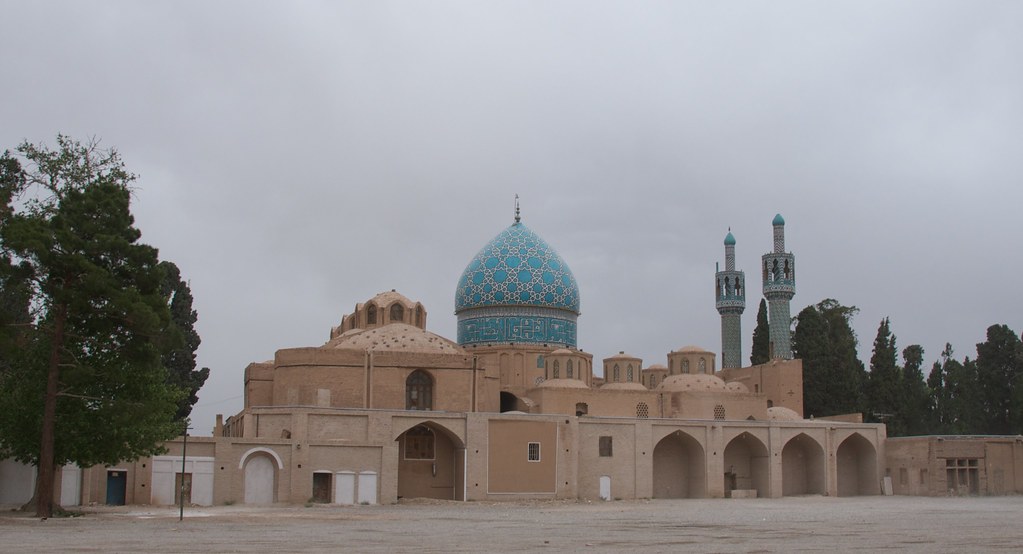
Baba Afzal Kashani (بابا افضل کاشانی), also known as Baba Afzal-e Din Muhammad ibn Muhammad Kashani, stands as one of Persian literature’s earliest mystical poets, composing in the late 11th and early 12th centuries (approximately 1042 to 1117 CE). Hailing from Kashan, the ancient city renowned for its silk and refined culture, Baba Afzal emerged during a transformative period when Persian poetry was crystallizing into its classical forms and Sufism was flourishing across the Iranian plateau.
Living in the Seljuk era, Baba Afzal witnessed a time of cultural renaissance despite political turbulence. This was the age when Khayyam penned his quatrains and Ghazali revolutionized Islamic thought. Yet Baba Afzal carved his own distinctive path, creating verses that spoke to both the intoxication of earthly love and the yearning for divine union.
A Pioneer of the Rubai
Baba Afzal is best remembered for his mastery of the rubai (quatrain), that deceptively simple four-line form that compresses profound wisdom into compact verbal jewels. His quatrains explore the perennial themes of Persian mystical literature: love (eshq), wine (mey) as metaphor for divine ecstasy, the transience of worldly existence, and the soul’s journey toward the Beloved.
What distinguishes Baba Afzal’s voice is its directness and emotional intensity. Unlike the more philosophical tone of Khayyam or the elaborate imagery of later poets, Baba Afzal speaks with raw longing. His language, while sophisticated, maintains an immediacy that makes his verses feel like overheard prayers or confessions whispered in the dark hours before dawn.
His style bridges the earlier Khorasani school’s directness with the emerging Iraqi school’s emotional depth, positioning him as a transitional figure whose work helped shape the trajectory of Persian lyric poetry.
The Diwan and Legacy
Baba Afzal’s collected works (Diwan) primarily consist of quatrains, though the exact number varies across manuscripts, a common challenge with medieval Persian poets. His verses circulated widely in his lifetime and beyond, often appearing in anthologies alongside those of more celebrated contemporaries.
One of his most beloved quatrains captures the essence of mystical longing:
If for one moment I could sit with you,
I’d give away both worlds with joy, it’s true.
They say I’ll see your face in Paradise,
What good is that garden if I can’t see you?
This verse exemplifies Baba Afzal’s gift for expressing the mystic’s paradox: the rejection of paradise itself in favor of union with the Beloved. The heaven promised by orthodox religion pales beside one moment of genuine connection with the divine essence.
Mystical Dimensions
Baba Afzal’s poetry operates within the rich tradition of Persian Sufi literature, where conventional religious imagery is reinterpreted through the lens of mystical love. His frequent references to wine, taverns, and intoxication should be read as coded language for spiritual states: the wine is divine love, the tavern is the realm beyond conventional piety, and intoxication represents the annihilation of the ego (fana) in the presence of God.
Yet there remains an ambiguity in his work, a deliberate blurring of sacred and profane love that would become characteristic of Persian poetry. Is the beloved human or divine? The answer, for Baba Afzal, seems to be: both, and neither matters as much as the quality of longing itself.
Enduring Influence
While not as universally known as Rumi or Hafez, Baba Afzal holds an important place in Persian literary history. He represents an early flowering of mystical expression in Persian verse, helping establish the themes and imagery that later masters would elaborate. His quatrains continue to be recited, set to music, and treasured by those who find in them a voice for their own spiritual yearning.
For today’s diaspora reader, Baba Afzal offers something precious: a reminder that the questions we carry (about love, meaning, and transcendence) are not modern inventions but ancient human concerns, expressed with grace and passion nearly a millennium ago in the gardens and caravanserais of medieval Persia.